

The National Flag of Kosovo
The national flag of Kosovo is a symbol of its independence and identity, recognized around the world. The flag of Kosovo features a blue field with a map of Kosovo in gold in the center, surrounded by six white stars in an arc above the map. Each element of the flag holds significant meaning, reflecting the unity and diversity of the people of Kosovo.
Table of Contents
Kosovo Flag Clip Art Images, Background, and Wallpapers

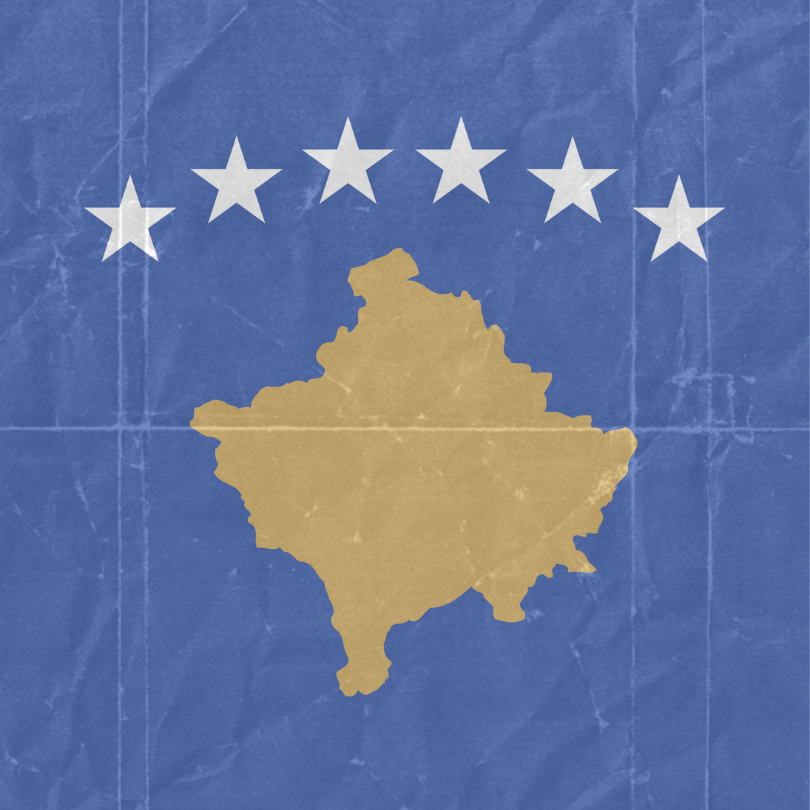


Free Download of the Kosovo Flag Image
To download an image of the Kosovo flag, right-click on the image and select “Save image as…” on a desktop or laptop. On a mobile device, press and hold on the image, then select “Download image” or “Save image” from the options that appear.
For Apple (iPhone/iPad):
- Press and hold the image.
- A menu will appear; tap “Add to Photos” or “Save Image.”
For Android:
- Press and hold the image.
- From the menu that appears, choose “Download image” or “Save image.”
This will save the image to your device’s photo gallery or downloads folder.
Design and Colors of the Kosovo Flag
The Kosovo flag features a design that symbolizes unity and diversity:
- Stars: The six white stars represent the six major ethnic groups in Kosovo: Albanians, Serbs, Turks, Gorani, Roma, and Bosniaks.
- Map: The gold map of Kosovo signifies the territory and sovereignty of the nation.
- Blue: The blue background (#0038A8) symbolizes peace and stability in the region.
- White Stars: (#FFFFFF) Represent inclusiveness and the equal status of all communities in Kosovo.
- Gold Map: (#FFD700) Reflects the rich cultural heritage and aspirations for a prosperous future.
The Origins and Design of the Kosovo Flag
The flag of Kosovo was adopted on February 17, 2008, coinciding with the declaration of independence from Serbia. The design was selected through an international competition to reflect the multi-ethnic character of the country. The Kosovo flag symbolizes a new beginning and the hope for a peaceful coexistence among its diverse communities.
The Birth of a National Symbol
The Kosovo flag was designed to represent the newly independent nation and its commitment to inclusivity. The flag was chosen as part of Kosovo’s effort to create a national identity distinct from other nations in the region. Its design emphasizes unity, diversity, and the territorial integrity of Kosovo.
Evolution of the Flag’s Symbolism
The symbolism of the Kosovo flag reflects the country’s aspirations and the spirit of its people:
- Stars: Represent the major communities living in Kosovo, promoting equality and unity.
- Map: Emphasizes the importance of Kosovo’s territory and independence.
- Blue Field: Symbolizes the hopes for peace, stability, and integration into European institutions.
The Central Design Elements
The central design elements of the Kosovo flag include the stars and the map:
- Stars: The stars are a reminder of the multi-ethnic composition of Kosovo, emphasizing the importance of unity.
- Map: The gold map of Kosovo stands out against the blue field, underscoring the country’s sovereignty.
Adoption and Official Recognition
The Kosovo flag was officially adopted on February 17, 2008, and has since become a symbol of national pride and independence. The flag is flown at government institutions, schools, and during official ceremonies, representing Kosovo’s status as an independent nation.
The Flag in Modern Kosovo Identity
Today, the Kosovo flag is a powerful symbol of national pride and unity. It is prominently displayed during national holidays, such as Independence Day (February 17), and during other significant events. The flag is also recognized internationally, serving as a representation of Kosovo’s commitment to peace and cooperation.
The Significance of the Kosovo Flag
The flag of Kosovo holds a deep and significant place in the hearts of its people, symbolizing the rich history, cultural diversity, and unity of the nation. Displaying the Kosovo flag is an act of pride and respect, often seen during important national events and celebrations.
When the Flag of Kosovo Can Be Displayed
The Kosovo flag may be displayed on any day, with specific guidelines for respectful handling and presentation. The flag is often seen on public buildings, at schools, in military institutions, and during official ceremonies. Citizens are encouraged to display the flag at their homes during national holidays and other significant occasions.
Flag Days and National Holidays
In Kosovo, the flag is prominently displayed on national holidays and special events, including:
- February 17 – Independence Day: Marks Kosovo’s declaration of independence in 2008, celebrated with parades, speeches, and cultural events where the flag is widely displayed.
- June 12 – Peacekeeping Day: Commemorates the arrival of NATO peacekeeping forces in 1999, a significant event in Kosovo’s history.
- November 28 – Albanian Flag Day: Celebrated by Kosovo’s Albanian majority, reflecting the shared cultural heritage with Albania.
Love for the Flag and Patriotism
The Kosovo flag is more than a national symbol; it embodies the pride and love Kosovars have for their country. Its unique design—a gold map and six stars on a blue field—represents Kosovo’s diversity, sovereignty, and aspirations for peace. The flag is an essential part of national celebrations and is proudly displayed in homes, schools, and public spaces.
Kosovo Flag Emoji Codes
1. Unicode Code Points
- Unicode: U+1F1FD U+1F1F0
- UTF-16: D83C DDFF D83C DDF0
2. HTML Entities
- HTML Entity (Decimal): 🇽🇰
- HTML Entity (Hexadecimal): 🇽🇰
3. CSS
content: "\1F1FD\1F1F0";4. JavaScript (JSON) & Java
// JavaScript Example
const kosovoFlag = "\uD83C\uDDFF\uD83C\uDDF0";

// Java Example
String kosovoFlag = "\uD83C\uDDFF\uD83C\uDDF0";
5. PHP & Ruby
// PHP Example
$kosovoFlag = "\u{1F1FD}\u{1F1F0}";

// Ruby Example
kosovo_flag = "\u{1F1FD}\u{1F1F0}"
6. Perl
my $kosovoFlag = "\x{1F1FD}\x{1F1F0}";7. Python
kosovo_flag = "\U0001F1FD\U0001F1F0"8. C#
string kosovoFlag = "\uD83C\uDDFF\uD83C\uDDF0";9. Swift
let kosovoFlag = "\u{1F1FD}\u{1F1F0}"10. Objective-C
NSString *kosovoFlag = @"\U0001F1FD\U0001F1F0";11. JSON
{
  "kosovoFlag": "\uD83C\uDDFF\uD83C\uDDF0"
}
12. SQL
INSERT INTO table_name (column_name) VALUES ('\uD83C\uDDFF\uD83C\uDDF0');13. Shell Scripting (Bash)
kosovo_flag=$'\U1F1FD\U1F1F0'14. Go (Golang)
kosovoFlag := "\U0001F1FD\U0001F1F0"15. Kotlin
val kosovoFlag = "\uD83C\uDDFF\uD83C\uDDF0"About Kosovo
Geography and Topography
Location and Geography
Kosovo is located in Southeast Europe, in the central part of the Balkan Peninsula. It is bordered by Serbia to the north and east, Montenegro to the west, and North Macedonia to the south. Kosovo’s geography includes:
- Mountain ranges, such as the Sharr Mountains and the Prokletije
- Valleys like the Kosovo Plain
- Numerous rivers, including the Ibar and Sitnica
- Rich forests and natural parks
Kosovo Map
Area and Population
Kosovo covers an area of approximately 10,887 square kilometers. As of 2023, the population is estimated to be around 1.8 million people.
Demographics and Ethnic Composition
Kosovo has a diverse population, primarily composed of:
- Ethnic Albanians: approximately 90% of the population
- Serbs: around 5%
- Other minorities, including Bosniaks, Gorani, and Romani
Name and History
Origin of the Name “Kosovo”
The name “Kosovo” is derived from the Serbian word “kos,” meaning “blackbird,” and refers to the historical region known as the “Field of Blackbirds,” which holds significant cultural importance.
History
The history of Kosovo is marked by a rich tapestry of cultures and events, beginning with its ancient settlements. Kosovo declared independence from Serbia in 2008, following a long history of conflict and political struggles. Key historical events include:
- The Battle of Kosovo in 1389, a pivotal moment in Serbian history
- The Kosovo War (1998-1999), leading to international intervention
- The establishment of the UN administration and eventual declaration of independence
Government and Politics
Capital
Pristina is the capital of Kosovo. It serves as the political, economic, and cultural center of the country.
Government and Politics
Kosovo operates as a parliamentary republic. The government is divided into three branches: the executive, led by the Prime Minister; the legislative, consisting of the Assembly of Kosovo; and the judicial, independent from the executive and legislative branches.
Values and Culture
Core values in Kosovo include respect for diversity, community solidarity, and cultural heritage. The country is known for its vibrant traditions and rich history.
Religion
Kosovo is predominantly Muslim, with about 95% of the population identifying as such, while the remaining population is mainly Orthodox Christian, reflecting the country’s cultural diversity.
Holidays
Major public holidays in Kosovo include:
- Independence Day on February 17
- Victory Day on June 12
- Religious holidays like Eid al-Fitr and Christmas are also celebrated
Demographics and Society
Language
The official languages of Kosovo are Albanian and Serbian, reflecting the country’s ethnic diversity. English is also widely spoken, especially among the younger population.
Society and Sports
Kosovo has a vibrant sports culture, with football being the most popular sport, alongside basketball and handball. The country has produced successful athletes who compete internationally.
Safety
Safety in Kosovo is generally good, though, like any region, some areas may have higher crime rates. The government works on maintaining public safety and fostering community relations.
Economy and Currency
Economy
Kosovo’s economy is developing, primarily based on services, trade, and agriculture. Key sectors include:
- Mining, particularly for mineral resources
- Energy production, with potential for renewable energy sources
- Agriculture, including the production of fruits and vegetables
Currency
The official currency of Kosovo is the Euro (EUR), which was adopted in 2002.
Culture and Arts
Culture and Arts
Kosovo’s culture is a blend of various influences, with significant contributions to music, dance, and crafts. The country is known for its traditional folk music and contemporary arts scene.
Cuisine
Kosovo’s cuisine reflects its cultural diversity, with key elements including:
- Burek, a savory pastry filled with meat or cheese
- Flija, a layered pancake dish
- Grilled meats and fresh salads, often enjoyed with homemade bread
National Anthem
The national anthem of Kosovo, “Europe,” was adopted in 2008. The anthem reflects the country’s aspirations for peace and unity.
Infrastructure and Transportation
Transportation
Kosovo has a developing transportation network, including roads and public transit. Major cities are connected by buses, while Pristina International Airport serves as the main international gateway.
Time Zone
Kosovo operates on Central European Time (UTC+1) and Central European Summer Time (UTC+2) during daylight saving time.
Web and Phone Code
Kosovo’s internet country code is “.xk,” and its international dialing code is +383.
Kosovo: Things to See and Do
Kosovo offers a range of attractions, from natural beauty to historical sites. Here are some top things to see and do:
Explore Natural Parks
Kosovo is home to beautiful natural parks.
- Brezovica: A stunning ski resort in the Sharr Mountains, popular in winter.
- Germia Park: A recreational area near Pristina, perfect for hiking and picnics.
Visit Historic Sites
Kosovo is rich in history, with many sites to explore.
- Gracanica Monastery: A UNESCO World Heritage site, known for its stunning frescoes.
- The Imperial Mosque: Located in Pristina, a beautiful example of Ottoman architecture.
Savor Traditional Cuisine
Experience Kosovo’s culinary landscape, including:
- Burek: A must-try pastry with various fillings.
- Baklava: A sweet dessert made with layers of dough and nuts.
Experience Local Festivals
Kosovo hosts various cultural events and festivals throughout the year.
- Gjakova’s Cultural Festival: Celebrating local traditions and arts.
- Kosovo Beer Festival: Showcasing local breweries and culinary delights.
Discover Quaint Towns
Visit charming towns for a slower pace.
- Peja: Known for its stunning nature and rich history.
- Mitrovica: A city with a diverse cultural heritage.